DOWNLOAD our App & Get Amazing Discount
Download Now
DOWNLOAD our App & Get Amazing Discount
Download Now
DOWNLOAD our App & Get Amazing Discount
Download Now
DOWNLOAD our App & Get Amazing Discount
Download Now
DOWNLOAD our App & Get Amazing Discount
Download Now
DOWNLOAD our App & Get Amazing Discount
Download Now
DOWNLOAD our App & Get Amazing Discount
Download Now
DOWNLOAD our App & Get Amazing Discount
Download Now
DOWNLOAD our App & Get Amazing Discount
Download Now
DOWNLOAD our App & Get Amazing Discount
Download Now
DOWNLOAD our App & Get Amazing Discount
Download Now
DOWNLOAD our App & Get Amazing Discount
Download Now

Popular Products


Mix Seeds – Rich in Antioxidants, Metabolism Booster & Good Source of Omega-3
74 reviews
Prime Fast Delivery
Right Fuel for Health
Good Source Of Fiber
Lower Cholesterol
Relieves Diarrhea
Nutritious Source of Plant Protein
Help Lower Blood Pressure
Support Healthy Bones
Reduce Inflammation
Aid Blood Cell Formation
Small200g
Large750g
- From Rs. 699
Rs. 1,350- From Rs. 699
- Unit price
- / per


Activated Charcoal Teeth 🦷 Whitening Treatment - Whitens Teeth Naturally, Kills Cavity causing Bacteria & Eliminates Bad Breath
83 reviews
Prime Fast Delivery
Good For Smokers
Protects Gums
Whitens Teeth Naturally
Prevents from Permanent Staining
Removes Toxins from Mouth
Eliminates Bad Breath
Kills Cavity causing Bacteria
Removes Plaque Build up
50ml
- Rs. 999
Rs. 1,110- Rs. 999
- Unit price
- / per


Rice Face & Body Scrub 🌾 Exfoliating Facial Scrub Formulated With Rice Microspheres, Absorbs Sebum & Makes Skin Clean, Smooth & Re-Energized
42 reviews
Prime Fast Delivery
Absorbs excess oil
Removes flaky dead cells
It gives a glow to the skin
Soothes the skin
Tightens skin pores
100ml
- From Rs. 1,199
Rs. 1,332- From Rs. 1,199
- Unit price
- / per


Hand & Foot Glowing CREAM 🦶✋ Formulated With Multi-Vitamins & Glowing Agents, Moisturizes, Soothes & Improves Skin Texture, Makes Skin Soft & Glowing
26 reviews
Prime Fast Delivery
Re-hydrates dry skin
Moisturize soothes and softens skin
It gives radiant, glowing skin
Improves skin texture
Makes skin smooth
Restores and nourishes the skin
Non-irritating formula
100ml
- Rs. 899
Rs. 999- Rs. 899
- Unit price
- / per


Glowing Neck Cream – Evens Skin Tone, Restore Radiance & Reduce Blemishes
15 reviews
Prime Fast Delivery
Moisturizes skin
Fades dark spots
Evens skin tone
Gives glowing and radiant skin
Reduce blemishes
Deep hydration
Restore radiance
Combats signs of aging
Reduce fine lines and wrinkles
100ml
- Rs. 1,099
Rs. 1,220- Rs. 1,099
- Unit price
- / per


Moringa Powder - Wellness in Every Spoon, Nature's Multivitamin (small)
13 reviews
Prime Fast Delivery
Boost Immune System
Skin Nourishment
Improve Digestive System
Fights Diabetes
Protects Liver
Control Blood Level
Anti-oxidant Property
Lower Cholesterol
Strong Bones
Great For Skin & Hair
Better Kidney Function
Better for Heart Health
Consult with Doctor if you have any Issue
Gross Weight: 220g
Net Weight: 160g
Food Grade Packing
Packed in Organic Bag
- Rs. 1,265
Rs. 1,405- Rs. 1,265
- Unit price
- / per
![Chia Seeds – Make Skin Glow, High in Fiber, Protein & Aid in Weight Loss [تخم میکسیکو]](http://mamasjan.com/cdn/shop/files/Chia_seeds_wb.jpg_1_640x.jpg?v=1775544818)
![Chia Seeds – Make Skin Glow, High in Fiber, Protein & Aid in Weight Loss [تخم میکسیکو]](http://mamasjan.com/cdn/shop/files/ChiaSeeds1_640x.jpg?v=1775544818)
Chia Seeds – Make Skin Glow, High in Fiber, Protein & Aid in Weight Loss [تخم میکسیکو]
19 reviews
Prime Fast Delivery
Help in Weight Loss
Super high in antioxidants
Got an impressive amount of fiber
Rare source of omega-3 fatty acids
Need calcium? Chia’s got it!
Solves Skin Related Issues
Small250g
Large800g
- From Rs. 1,699
Rs. 1,888- From Rs. 1,699
- Unit price
- / per


Niacinamide Serum - Strengthens Skin's Barrier & Fades Hyperpigmentation
17 reviews
Prime Fast Delivery
Fades Hyperpigmentation
Improves texture
Reduces sebum production
Gives glow
Softens skin
Protects from sun damage
Closes open pores
Treats hyperpigmentation
Fades scars
30ml
- Rs. 1,099
Rs. 1,220- Rs. 1,099
- Unit price
- / per


Bamboo Murabba (بانس مربہ) - Nutrient Rich, Purifies Blood, Improves Digestion & Beneficial for Cardiac Health- 💯 Organic & Pure
6 reviews
Prime Fast Delivery
Made with Bamboo Shoots
100% Pure & Organic
Nutrient Rich
Purifies Blood
Rich in Antioxidants
Helps in Weight Loss
Strengthen Bones
Good for Digestive Health
Beneficial for Cardiac Health
Promotes Health & Well Being
Perfect Option for Snaking
700gm Approx
- Rs. 1,650
Rs. 1,833- Rs. 1,650
- Unit price
- / per

-10%
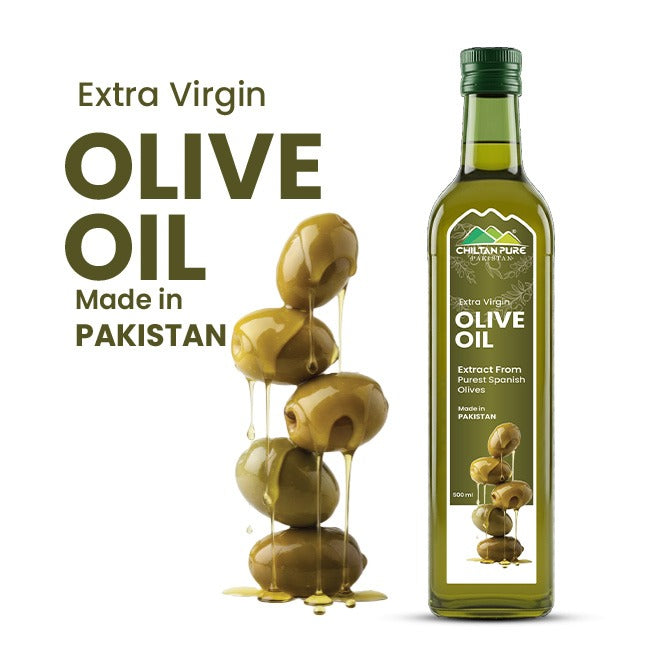
ChiltanPure Extra Virgin Olive Oil 500ml – Cold-Pressed Zaitoon Oil in Glass Bottle / ایکسٹرا ورجن زیتون آئل
2
sold in last
8
hours
Prime Fast Delivery
|
- Rs. 1,999
Rs. 2,218- Rs. 1,999
- Unit price
- / per
Tags:
/
Discounted Products
/
Edible oils
/
Food
/
NEW ARRIVAL
/
Oils
/
Olive-Zaitoon
/
Top Products
/
Top Seller
10 customers are viewing this product


Order Karne Mein Mushkil Ho? WhatsApp Par Order Karein! BARGAIN NOW
ChiltanPure Extra Virgin Olive Oil 500ml is a cold-pressed, unrefined olive oil — zaitoon ka tel — supplied in Pakistan in a 500ml glass bottle, priced at Rs. 1,999. Extra virgin is the highest grade of olive oil: pressed mechanically from fresh olives with no heat and no chemical refining, which is what preserves its natural polyphenols, vitamin E and fruity aroma. It suits salad dressing, drizzling, dips and low-to-medium heat cooking, and is also used traditionally on hair and skin. Available with cash on delivery across Pakistan.
Specifications
| Grade | Extra Virgin (first cold press) |
| Botanical name | Olea europaea |
| Extraction method | Cold pressed, mechanical only |
| Refined or blended | No — unrefined, no seed oil blending |
| Packaging | Glass bottle |
| Net volume | 500ml |
| Price in Pakistan | Rs. 1,999 |
| Maximum acidity for this grade | 0.8% free fatty acid (international extra virgin standard) |
| Approximate smoke point | 190–210°C |
| Monounsaturated fat | Approx. 73% of total fat |
| Brand | ChiltanPure |
| Delivery | Nationwide, cash on delivery available |
What “extra virgin” actually means
Not all olive oil sold in Pakistan is the same product, and the word that matters on the label is the grade.
- Extra virgin is pressed mechanically from fresh olives without heat or chemical solvents, and must test below 0.8% free fatty acid to legally carry the name. Nothing is added and nothing is refined out.
- Virgin is made the same way but tests slightly higher in acidity, up to 2%.
- Refined or “pure” olive oil is oil that failed the taste or acidity test and was then chemically treated to remove the defects. It is edible and inexpensive, but most of the polyphenols and aroma are gone. “Pure” sounds premium on a label — it is actually the refined grade.
- Pomace oil is extracted with solvents from the leftover pulp and pits after pressing. It is the lowest grade sold as olive oil, and it is what many of the very cheap large bottles in the market actually contain.
This product is grade one: cold pressed, unrefined and unblended.
What is inside the bottle
Olive oil is roughly 73% monounsaturated fat, mostly oleic acid. It also carries vitamin E and a family of natural plant compounds called polyphenols — including oleocanthal, which is responsible for the slight peppery catch at the back of the throat in a fresh extra virgin oil. That sensation is a quality signal, not a fault.
Olive oil is the central fat of the Mediterranean dietary pattern and one of the most studied cooking oils in nutrition science. It is a food, not a medicine, and we do not claim it treats or prevents any condition. If you are managing a medical condition, follow your doctor's or dietitian's guidance.
How to use it
For cooking
Extra virgin olive oil handles low and medium heat comfortably — sauteing, bhunai at moderate heat, roasting vegetables, and finishing daals, pastas and curries. Its smoke point sits around 190–210°C, which is above normal stovetop sauteing temperature. For deep frying at high heat, a refined or pomace grade is the more economical choice; deep frying in extra virgin destroys the exact compounds you paid extra for.
Raw, on food
This is where extra virgin earns its price. Drizzle over salad, hummus, grilled fish, soup, or plain roti. Heat degrades polyphenols, so uncooked use preserves the most.
For hair
Warm a small amount, work it into the scalp and along the lengths, leave for 30 minutes or overnight, then shampoo out. It coats the hair shaft and reduces moisture loss, which is why hair feels softer and combs more easily afterwards. Once or twice a week is enough.
For skin
Apply a few drops to damp skin after washing, as a final moisturising layer. Best suited to dry and normal skin. If you are acne-prone, patch test first — olive oil is comedogenic for some skin types.
For baby massage
Traditionally used across Pakistan for infant malish. Warm slightly, patch test on a small area first, and avoid broken or irritated skin. Check with your paediatrician if your baby has eczema or sensitive skin.
Zaitoon ka tel — istemal ka tareeqa
Zaitoon ka tel (olive oil) Pakistan mein sadiyon se khane aur jild aur baalon dono ke liye istemal hota aya hai. Extra virgin ka matlab hai sabse pehla, thanda nichoda hua tel — jis mein na garmi lagi hai na koi chemical refining hui hai.
Khane mein: salad, dips, pasta aur halki aanch par pakane ke liye behtareen hai. Tez aanch par deep frying ke liye refined ya pomace grade zyada munasib hai — extra virgin us garmi mein apni khoobiyan kho deta hai.
Baalon ke liye: thora sa tel halka garam karein, scalp aur baalon ki lambai mein achi tarah lagayein, 30 minute se raat bhar tak chorein, phir shampoo kar lein. Hafte mein ek ya do martaba kaafi hai.
Jild ke liye: nahane ke baad geeli jild par chand qatray lagayein. Khushk jild ke liye behtareen hai. Agar chehre par daane nikalte hain to pehle chote hisse par test karein.
Storage — and why it turns cloudy in winter
Light, heat and oxygen are the three things that ruin olive oil. Keep the bottle closed, away from the stove, and out of direct sunlight. Glass protects better than plastic, but it does not make the oil immune.
In Pakistani winters — particularly in Lahore, Islamabad and the north — olive oil may turn cloudy or partly solid inside the bottle. This is completely normal. The monounsaturated fats are simply crystallising at low temperature, and it is a sign the oil has not been heavily refined. Leave it at room temperature and it clears on its own.
Myths and facts
Myth: olive oil cannot be used for cooking, it burns.
Fact: extra virgin olive oil smokes at roughly 190–210°C. Normal sauteing runs 120–180°C. It handles everyday cooking fine. It is high-heat deep frying where it stops making economic sense.
Myth: cloudy oil in winter has gone bad.
Fact: it means the fats are crystallising in cold weather. Heavily refined oils stay clear longer. Cloudiness leans toward authenticity, not against it.
Myth: greener oil is better oil.
Fact: colour comes from chlorophyll and olive variety, not quality. Professional tasters assess olive oil in coloured glasses precisely so colour cannot bias them.
Myth: the fridge test proves an oil is real.
Fact: the fridge test is unreliable — refined oils and blends also solidify. Grade, acidity and harvest date are the real indicators.
Frequently asked questions
What is the price of this olive oil in Pakistan?
ChiltanPure Extra Virgin Olive Oil 500ml is priced at Rs. 1,999, supplied in a glass bottle, with cash on delivery available nationwide.
Is zaitoon oil the same as olive oil?
Yes. Zaitoon is the Urdu word for olive, so zaitoon ka tel and olive oil are the same product.
Can I cook Pakistani food in this olive oil?
Yes — for sauteing, bhunai at moderate heat, roasting and finishing dishes. For deep frying pakoras or samosas at high heat, use a refined oil instead.
What is the smoke point of extra virgin olive oil?
Approximately 190–210°C, which is higher than most people assume.
What is the difference between extra virgin and pomace olive oil?
Extra virgin is the first mechanical press of fresh olives with no refining. Pomace is solvent-extracted from the pulp and pits left over after pressing, then refined. They are very different products at very different price points.
Why does “pure olive oil” cost less than extra virgin?
Because “pure” is the trade term for refined olive oil, not for a higher grade. It has been chemically treated to strip defects, which also strips most of the polyphenols.
How do I know if olive oil is real?
Check the grade on the label, look for a stated acidity percentage, look for a harvest date rather than only a best-before date, and compare the price per litre. Genuine extra virgin cannot realistically be produced and landed in Pakistan at bargain-basement prices.
What acidity should extra virgin olive oil have?
Under 0.8% free fatty acid is the international legal maximum for the extra virgin grade. Good producers publish figures well below that.
Is olive oil good for hair?
It is widely used as a pre-shampoo scalp and hair oil. It coats the hair shaft and reduces moisture loss, which makes hair feel softer and easier to comb. It is not a treatment for hair loss.
Can I use olive oil on my face?
Yes, for dry and normal skin, applied to damp skin after cleansing. Patch test first if you are acne-prone.
Is olive oil safe for baby massage?
It has been used traditionally across Pakistan for infant massage. Patch test first, avoid broken or irritated skin, and consult your paediatrician if your baby has eczema.
Which is better, olive oil or mustard oil?
They do different jobs. Mustard oil has a strong flavour and a high smoke point and suits traditional deep frying and tarka. Olive oil is milder, higher in monounsaturated fat, and better for salads, drizzling and moderate-heat cooking.
Which is better for hair, olive oil or coconut oil?
Coconut oil penetrates the hair shaft more effectively because of its smaller molecular size. Olive oil coats and conditions the surface. Many people alternate between the two.
How long does olive oil last?
It does not spoil dangerously but it goes rancid over time and loses its beneficial compounds. Keep it sealed and away from heat and light, and finish an opened bottle within a few months.
What size should I buy?
Buy a size you will finish within a few months. A large bottle used slowly degrades before you reach the bottom, so 500ml suits most households that cook with olive oil a few times a week.
Does the peppery feeling at the back of the throat mean something is wrong?
No — that is oleocanthal, a natural polyphenol, and it signals a fresh high-polyphenol extra virgin oil. It is a quality marker.
Is olive oil halal?
Olive oil is a plant oil and is inherently halal.
Do you deliver across Pakistan?
Yes — nationwide delivery including Karachi, Lahore, Islamabad, Rawalpindi, Faisalabad, Multan, Peshawar and Quetta, with cash on delivery available.
Related Products
Example product title
- Rs. 1,999
Rs. 2,218- Rs. 1,999
- Unit price
- / per
Example product title
- Rs. 1,999
Rs. 2,218- Rs. 1,999
- Unit price
- / per
Example product title
- Rs. 1,999
Rs. 2,218- Rs. 1,999
- Unit price
- / per
Example product title
- Rs. 1,999
Rs. 2,218- Rs. 1,999
- Unit price
- / per
Example product title
- Rs. 1,999
Rs. 2,218- Rs. 1,999
- Unit price
- / per
Example product title
- Rs. 1,999
Rs. 2,218- Rs. 1,999
- Unit price
- / per
Example product title
- Rs. 1,999
Rs. 2,218- Rs. 1,999
- Unit price
- / per
Example product title
- Rs. 1,999
Rs. 2,218- Rs. 1,999
- Unit price
- / per
Example product title
- Rs. 1,999
Rs. 2,218- Rs. 1,999
- Unit price
- / per
Example product title
- Rs. 1,999
Rs. 2,218- Rs. 1,999
- Unit price
- / per
Recently Viewed Products
Example product title
- Rs. 1,999
Rs. 2,218- Rs. 1,999
- Unit price
- / per
Example product title
- Rs. 1,999
Rs. 2,218- Rs. 1,999
- Unit price
- / per
Example product title
- Rs. 1,999
Rs. 2,218- Rs. 1,999
- Unit price
- / per
Example product title
- Rs. 1,999
Rs. 2,218- Rs. 1,999
- Unit price
- / per
Example product title
- Rs. 1,999
Rs. 2,218- Rs. 1,999
- Unit price
- / per
Example product title
- Rs. 1,999
Rs. 2,218- Rs. 1,999
- Unit price
- / per
Example product title
- Rs. 1,999
Rs. 2,218- Rs. 1,999
- Unit price
- / per
Example product title
- Rs. 1,999
Rs. 2,218- Rs. 1,999
- Unit price
- / per
Example product title
- Rs. 1,999
Rs. 2,218- Rs. 1,999
- Unit price
- / per
Example product title
- Rs. 1,999
Rs. 2,218- Rs. 1,999
- Unit price
- / per

Pakistan’s Favorite & Premium Store
Mama's Jan is Pakistan’s favorite and premium online store, bringing you 100% authentic products from trusted brands. From pharmacy & medicines, beauty & cosmetics, perfumes, skincare, personal care and beauty accessories to groceries, household essentials, home appliances and everyday lifestyle products — we offer a wide range of quality products, all in one place. Shop with confidence, enjoy reliable service, and discover everything you need at Mama's Jan — Pakistan’s Premium Shopping Destination.
Download Our App

Adress:
Head Office: Brewery Road Quetta, Balochistan
WhatsApp For Orders:
+92-316-9993051
WhatsApp For Complaints:
+92 317 1117805
Email:
my@mamasjan.pk
Top Brand's
ChiltanPure Bolan Clinic Man Kind My Mimi Dasht Spices Aroma Therapy Calm & Relax MiloTop Categories
Essential Oil Massage Oil Infused Oil Carrier Oils Facial Serums Cream Hair Serums Shampoos Conditioners Facial Kit Lotions Tints Balms Mud Mask Scrubs Urgent Facials Porridge Buckwheat Flour Energy Drinks Seeds Nuts Professional Makeup Remover V Wash Spices Teeth Whitening Treatment Herbal SupplementsTop Categories
Body Wax Perfumes Pain Relievers Powder Hair Clays Hair Spray Comb Scissors Brush Shoe Wax Hand Wash Bath Salt Air Freshners Beauty Blenders Candles Derma Roller Pink Salt Lamps Natural Cosmetics Foundations Micellar Water Face Primer Herbal Teas Desi Ghee Honey Edible Oil Edible PowderTop Products
Castor Oil Tea Tree Oil Argan Oil Lavender Oil Jojoba Oil Olive Oil Moringa Powder Basil Seeds Vitamin C Serum Hyaluronic Acid Serum Organic Henna Powder Chia Seeds Reddish Lip Tint Seabuckthorn OilTop Products
Taramira Oil Eucalyptus Oil Almond Oil Rosehip Oil Retinol Serum Mustard Oil Blackseed Oil Cedarwood Oil Charcoal Powder Niacinamide Serum Desi Ghee Amla Oil Sandalwood Powder Orange Oil Bael Fruit Powder Lemon Oil Onion Oil Sesame Oil Anti-Stretch Mark Serum Distilled Water Pinkinsh Tint Aloe Vera Gel Hair Gel Collagen Serum Gluta Glow Serum Hand & Foot Glowing Cream Ashwagandha Powder Shea Butter Naina Eye Serum Flaxseed Oil Salicylic Serum Pumpkin Oil Quetta Doodh Patti Rapunzel Hair Oil Beetroot Powder Jasmine Oil Fenugreek Oil Kojic Serum Tea Tree Face Wash Pink Salt Lamp Neem Oil Cocktail Hair OilUseful Links
How To Order Track Your Order Payment Methods Customer Support Why Choose Us Payment Policy Cookie Policy Disclaimer Our Brands Refund Policy Quality Assurance Certifications & Registrations Wholesale / B2B Store Locations Our Story Founder & Leadership Manufacturing Process Lab Testing & Product Safety Ingredient Sourcing Private Label / White Label Research & References Recipes How-To Guides Ingredient Encyclopedia Distributors Return & Exchange Policy Wedding Sale Under 999 Gift 🎁 Blogs Recommended By About Us Contact Us FAQ's Privacy Policy Delivery Policy Cancellation Policy Terms and Conditions
© Mamasjan 2026 | All Rights Reserved


- Choosing a selection results in a full page refresh.