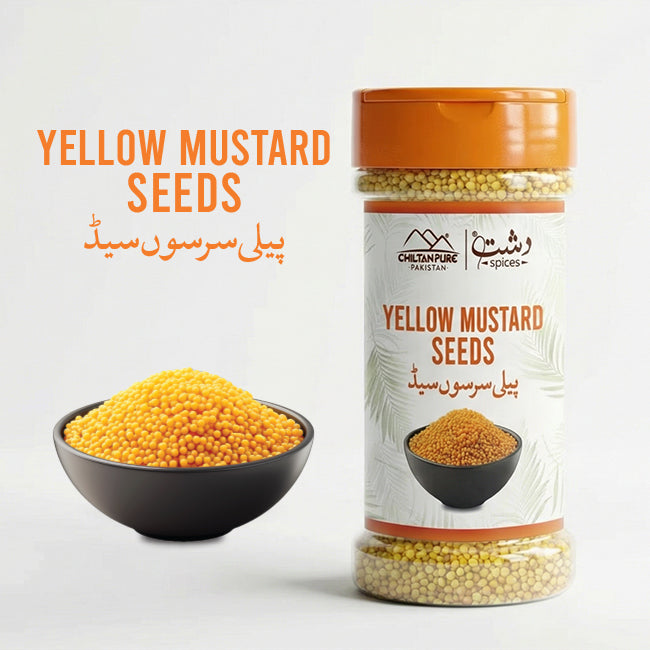
Yellow Mustard Seeds are small, round, and golden-colored seeds known for their mild, slightly tangy flavor and aromatic quality. They are a versatile spice used in kitchens worldwide, particularly in Indian, Asian, and European cuisines, to add subtle heat and depth to various dishes. These seeds are a staple ingredient in pickles, curries, sauces, salad dressings, and spice blends, offering a distinctive taste that enhances every recipe.
Rich in natural antioxidants, essential minerals, and beneficial plant compounds, Yellow Mustard Seeds support digestion, metabolism, and overall wellness. When tempered in hot oil, they release a warm, nutty aroma that elevates the flavor profile of any dish, making them an essential pantry spice for home cooks and professional chefs alike.
Sourced from high-quality mustard seeds and processed under hygienic conditions, Yellow Mustard Seeds ensure freshness, purity, and superior flavor. Incorporate them into your cooking to enjoy their mild tang, aroma, and the nutritional benefits they bring to daily meals.
Appearance
Small, round seeds with a pale yellow to light tan color. The seeds are whole and uniform in size.
Texture
Hard and smooth when dry. They become soft when cooked in liquid.
Flavor
Mild and slightly pungent with a nutty taste. The flavor is less sharp than black mustard seeds.
Aroma
A light, earthy smell. The aroma becomes stronger when the seeds are heated in oil.
Versatility
Use for tempering, pickling, and cooking. Add to curries, vegetables, and salads. Also good for making mustard paste and growing sprouts.
Storage Instructions
Store in an airtight container. Keep in a cool, dry place away from sunlight.
FAQs
Are these seeds whole or ground?
They are whole, natural seeds. You can grind them if needed.
How long do they stay fresh?
They stay fresh for up to 2 years when stored properly in a sealed container.
Can I grow sprouts from these seeds?
Yes. Soak them in water and keep moist for a few days to grow sprouts.
Are they gluten-free?
Yes. Pure mustard seeds are naturally gluten-free.
What is the difference between yellow and black seeds?
Yellow seeds are milder and larger. Black seeds are smaller and more pungent.
Can I use them for tempering?
Yes. They are commonly used for tempering in many recipes.


![Chia Seeds – Make Skin Glow, High in Fiber, Protein & Aid in Weight Loss [تخم میکسیکو]](http://mamasjan.com/cdn/shop/files/Chia_seeds_wb.jpg_1_640x.jpg?v=1775544818)
![Chia Seeds – Make Skin Glow, High in Fiber, Protein & Aid in Weight Loss [تخم میکسیکو]](http://mamasjan.com/cdn/shop/files/ChiaSeeds1_640x.jpg?v=1775544818)