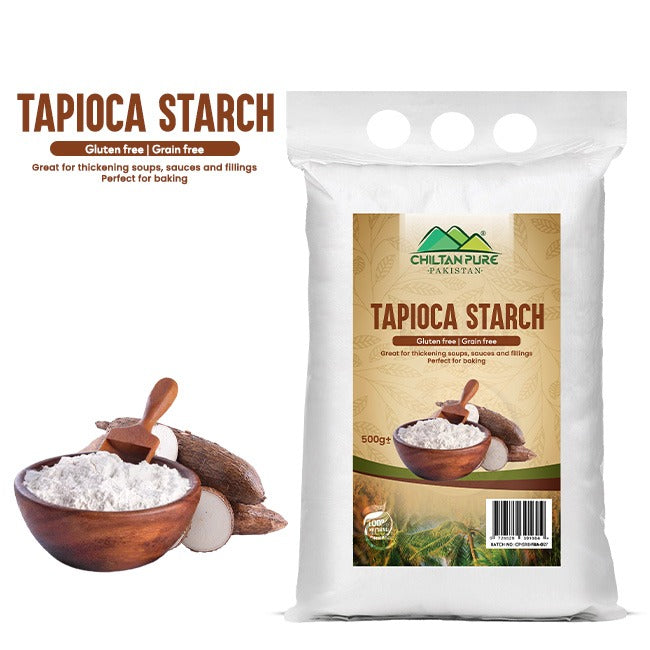
Tapioca Starch is a fine, white, natural powder extracted from the roots of the cassava (manioc) plant. Known for its neutral taste, smooth texture, and exceptional thickening properties, it is a staple ingredient in both cooking and baking. Being gluten-free, tapioca starch is an ideal choice for individuals with gluten intolerance, celiac disease, or those seeking clean and natural ingredients for their recipes.
This versatile starch works beautifully as a thickener for soups, sauces, gravies, and puddings, providing a silky smooth consistency without altering the flavor. In baking, it enhances the texture of bread, cakes, and cookies, giving them a light, soft, and fluffy result. Tapioca starch also creates crisp coatings for fried foods, making it perfect for batters and deep-fried delicacies.
Additionally, tapioca starch is commonly used in traditional dishes, desserts, and snacks, such as sabudana khichdi, puddings, and bubble teas. With its natural properties, it ensures better texture, consistency, and presentation while remaining a healthy, all-natural ingredient.
Appearance
A stark, pure white flour with an incredibly fine, silky-smooth texture that feels light as air.
Texture
Fine, soft, and remarkably smooth, almost like high-quality cosmetic powder. It has a cool, silky feel between your fingers.
Flavor
Exceptionally neutral and mild, with just the faintest hint of sweetness. It acts as a blank canvas, never competing with other flavors in your dish.
Aroma
Virtually odorless, with only a very subtle, clean, and starchy scent that disappears completely when cooked.
Versatility
Excellent for thickening soups and sauces, making chewy flatbreads, creating gluten-free breads with a better crumb, and of course, for homemade boba pearls.
Precautions
Store in an airtight container in a cool, dry place. It has a long shelf life but is best used within a year. Always cook tapioca flour; it is not safe to eat raw.
FAQs
Is Tapioca Flour the same as Cassava Flour?
They come from the same plant but are processed differently! Tapioca flour is made only from the starchy liquid extracted from the cassava root, resulting in a pure starch. Cassava flour uses the whole root, making it more fibrous.
Can I use it 1:1 for wheat flour?
No, it's a starch, not a flour. It's best used in combination with other gluten-free flours (10-30% of the blend) or as a thickener in place of cornstarch (1:1 substitution).
Why did my sauce become slimy?
You likely used too much or overcooked it. Tapioca thickens powerfully and can become gelatinous if overused. Start with less than you think you need.
Is it Paleo or Keto-friendly?
It is approved for Paleo diets as it's a whole food source. However, it is high in carbohydrates, so it is not suitable for a strict Keto diet.
How do I make it at home?
It's a complex process involving peeling, grating, soaking, and extracting starch from the cassava root. For purity, consistency, and safety, we recommend using our ready-made flour.


![Chia Seeds – Make Skin Glow, High in Fiber, Protein & Aid in Weight Loss [تخم میکسیکو]](http://mamasjan.com/cdn/shop/files/Chia_seeds_wb.jpg_1_640x.jpg?v=1775544818)
![Chia Seeds – Make Skin Glow, High in Fiber, Protein & Aid in Weight Loss [تخم میکسیکو]](http://mamasjan.com/cdn/shop/files/ChiaSeeds1_640x.jpg?v=1775544818)